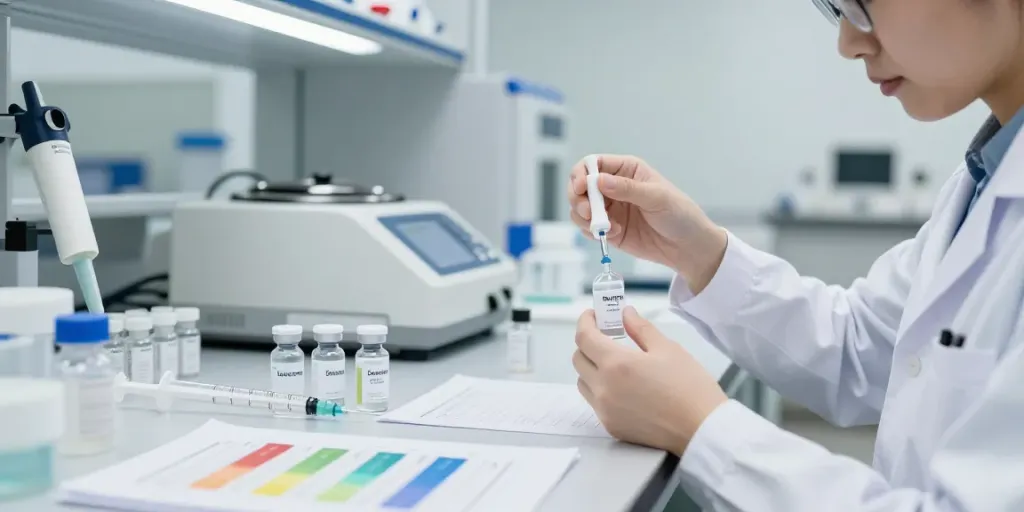
The Importance of Accurate Peptide Dosing
In the realm of peptide therapy, precision is not merely a preference but a necessity. Peptides, which are biologically active chains of amino acids, interact specifically with cellular receptors in the body. Mistakes in dosing can lead to ineffective treatments or, worse, adverse health effects. This is where a peptide calculator becomes invaluable. These tools guide users through the intricate math required to ensure accurate dosing, thus ensuring the efficacy of the peptide regimen.
What is a Peptide Calculator?
A peptide calculator is a digital tool designed to help users calculate the correct dosages of peptides based on their concentration and the volume of solvent used in reconstitution. By inputting specific variables such as vial size, total miligrams of the peptide, and the desired dosage, users receive precise measurements of how much to draw from the vial in terms of units on a syringe. This functionality avoids the complexities of manual calculations that can easily lead to dosing errors.
Why Accurate Dosage is Critical
Accurate peptide dosing is crucial for several reasons:
- Effectiveness: Therapeutic doses of peptides are often measured in micrograms (mcg) rather than milligrams (mg). For instance, administering 250 mcg instead of 80 mcg of a compound that operates on strict biological thresholds can determine whether the peptide achieves its intended effect.
- Safety: Over-dosing can lead to severe physiological reactions, while under-dosing might give the impression that a peptide is ineffective, wasting both time and resources.
- Financial Investment: Peptides represent a significant financial commitment, and dosing errors can result in unnecessarily rapid depletion of supplies.
Common Pitfalls in Peptide Administration
Users often face several challenges when administering peptides:
- Complex Mathematics: The need to understand the conversion from milligrams to micrograms and milliliters to units can overwhelm new users.
- Syringe Confusion: Mixing up terms like "units," "mL," and "ticks" on syringes can lead to miscalculations.
- Misinterpretation of Dosage Charts: Standard conversion charts may not account for specific vial sizes or diluent volumes, leading to significant errors in dosage.
Understanding Peptide Reconstitution
Proper peptide reconstitution is fundamental to maintaining the integrity and effectiveness of the product. This process involves dissolving the lyophilized peptide powder in a solvent, typically bacteriostatic water, to create a solution usable for injection.
Preparing Your Workspace for Peptide Handling
To ensure success in the reconstitution process, follow best practices for setup:
- Clean and disinfect your workspace thoroughly.
- Gather all necessary materials, including the peptide vial, diluent, syringes, and alcohol swabs.
- Ensure that your hands are washed and sanitized before handling any supplies.
Step-by-Step Guide to Reconstitution
Follow these steps for accurate reconstitution:
- Remove the protective caps from both the peptide and solvent vials.
- Using an alcohol swab, disinfect the rubber stoppers of both vials.
- Draw the calculated volume of bacteriostatic water into the syringe.
- Insert the needle into the peptide vial at an angle, allowing the liquid to flow gently down the glass wall.
- Swirl or roll the vial gently until fully dissolved—never shake the vial.
Storage Considerations for Peptide Solutions
After reconstitution, the stability of peptide solutions is a concern. Here are recommended storage practices:
- Store reconstituted peptides at +4°C for short-term use and ideally at -20°C for long-term storage.
- Avoid repeated freeze-thaw cycles, as these can compromise peptide integrity.
- Peptide solutions are typically stable for three weeks at +4°C and up to four months at -20°C.
Using the Peptide Calculator Effectively
Utilizing a peptide calculator can streamline the complex process of determining the correct dosages. By understanding how to input data accurately, users can leverage this tool to ensure effective dosing.
How to Input Data for Accurate Results
When using the peptide calculator, ensure you input the following:
- Total milligrams (mg) of the peptide in your vial.
- Volume of bacteriostatic water (mL) added for reconstitution.
- Your desired dosage (mcg) for administration.
Understanding Units: mcg vs. mg
An essential aspect of using a peptide calculator is understanding the difference between micrograms and milligrams. One milligram (mg) is equivalent to 1,000 micrograms (mcg). Therefore, a vial containing 5 mg of a peptide holds 5,000 mcg. This conversion is crucial for accurate dosing and effective therapeutic outcomes.
Interpreting Output from the Calculator
Once the data is input, the output from the calculator will provide:
- The concentration of the solution in mcg/mL.
- How many units to draw up in the syringe to achieve the desired dosage.
- A clear understanding of whether the amount drawn aligns with the expected therapeutic dose.
Common Questions about Peptide Calculations
Users often have questions about the intricacies of peptide calculations. Here are some of the most frequently asked:
Can I Use Standard Conversion Charts?
While static conversion charts can provide baseline guidance, they often do not account for variations in vial size or water volume. A dynamic calculator adapts to real-world variables, providing a more reliable solution.
How to Handle Over-Dosing Risks?
Over-dosing can lead to negative physiological effects or receptor desensitization. Always use a peptide calculator to ensure that you do not exceed the recommended dosage. If you suspect you have over-dosed, consult a medical professional immediately.
What to Do if I Miscalculate My Dose?
If a dosing error occurs, review your calculations. If you inadvertently administer a lower dose, consider whether this will affect your treatment plan. In case of a higher dose, monitor for any adverse effects and consult a medical professional as necessary.
Future Trends in Peptide Research and Application
As the field of peptide therapy evolves, several trends are emerging that will shape its future.
Emerging Technologies in Peptide Therapy
Innovations in peptide synthesis and delivery methods are revolutionizing how peptides are used in therapy. Enhanced delivery systems may improve bioavailability, making peptide treatments more effective.
Predictions for Peptide Research in 2026
The future of peptide research looks promising, with increased focus on personalized medicine. As understanding of individual response to peptides improves, customized peptide therapies may become the norm.
The Role of Digital Tools in Research Efficiency
In an increasingly digital world, tools like peptide calculators will continue to play a crucial role in enhancing research efficiency and accuracy, ultimately leading to better health outcomes for users.
What is the Best Way to Learn More About Peptides?
For those looking to delve deeper into peptide therapy, online communities, research articles, and educational platforms offer valuable resources. Staying informed about ongoing research and new developments is key for anyone involved in peptide therapy.