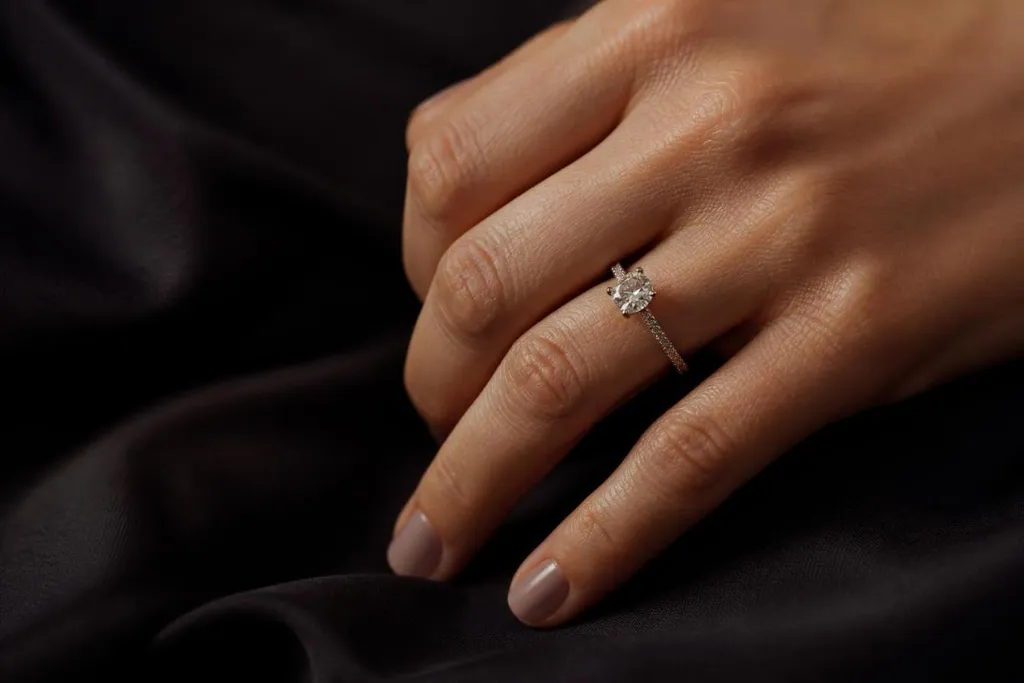
An engagement ring can gain considerably more brilliance without becoming visually heavy. Micro-pavé achieves this through scale: very small diamonds are positioned closely along the band, creating a fine, almost continuous line of light. Rather than competing with the centre stone, well-proportioned micro-pavé can lead the eye towards it, adding texture and refinement to an otherwise clean setting. It is a detail that becomes especially effective in motion, when numerous small facets catch light across the shoulders.
For someone who has chosen a centre stone but wants greater detail through the band, this upgrade offers a more delicate approach than heavier diamond-set shoulders. The appeal lies not simply in adding more stones, but in creating a finely finished surface where diamonds, metal and centre setting feel visually connected.
What Makes Micro-Pavé Different?
Pavé takes its name from the idea of a surface being "paved" with gemstones. Micro-pavé follows the same principle at a finer scale, using small diamonds and discreet setting work to minimise the amount of visible metal between them.
This produces a different effect from larger shoulder-set diamonds. Individual stones are less likely to dominate the design; instead, they combine visually into a continuous ribbon of sparkle.
That quality makes micro-pavé particularly suitable for engagement rings where the centre stone should remain unquestionably dominant. A solitaire can retain much of its original clarity while gaining extra brilliance along the band.
The setting also rewards close inspection. From a distance, the shoulders may simply appear bright. Up close, the precision of the individual stones and their placement becomes more apparent.
For wearers who appreciate fine detailing rather than bold embellishment, that distinction can make micro-pavé especially appealing.
Balancing the Band With the Centre Stone
The relationship between centre-stone scale and band detail deserves careful consideration.
A larger centre diamond can support a more noticeable amount of shoulder sparkle without losing its visual authority. Someone choosing a 2-carat stone, for example, might prefer micro-pavé not merely because it makes the ring look more luxurious, but because the detailed band creates a smoother visual transition towards a substantial centre.
With a smaller diamond, fine micro-pavé can work equally well if the setting remains restrained. Using very small accent stones helps prevent the shoulders from becoming the dominant feature.
Diamond shape influences the balance too. An oval or pear centre provides elongated finger coverage, while a round stone creates concentrated brilliance in the middle. Emerald and radiant cuts offer stronger geometric lines, making the fine texture of micro-pavé an attractive contrast.
Ultimately, the goal is not to maximise the amount of sparkle everywhere. The band should support the centre stone's shape and scale rather than blur the hierarchy of the design.
How Metal Colour Shapes the Look
The small amount of visible metal within micro-pavé means its colour can subtly influence the overall effect.
Platinum and white gold tend to blend closely with colourless diamonds. This can make the pavé surface appear especially continuous, as the setting metal visually recedes between the stones.
Yellow gold creates more contrast. The warm shank remains perceptible beneath and around the diamonds, giving the ring a richer, more traditional character while retaining plenty of brilliance.
Rose gold softens the combination further, bringing warmth to the setting and creating a romantic contrast against colourless stones.
Metal choice should also take the centre setting into account. Matching metal throughout produces a unified appearance, while carefully considered two-tone construction can separate the band visually from the claws or basket.
These details may be subtle individually, but together they determine whether the finished ring feels cool and contemporary, warm and traditional, or somewhere between the two.
Everyday Wear and Caring for Fine Pavé
Micro-pavé is intricate by nature, so appropriate care helps preserve both its appearance and setting integrity.
Small spaces around the diamonds can collect soap, hand cream and everyday residue. Gentle regular cleaning prevents this build-up from muting the fine sparkle across the band.
Periodic professional inspection is also worthwhile. A jeweller can check the small settings for wear and ensure the stones remain secure, particularly after any significant knock.
The future wedding band deserves consideration as well. A plain band can create elegant contrast against micro-pavé, while another diamond-set ring produces a more continuous bridal look. Whichever approach is chosen, the rings should sit comfortably together without unnecessary rubbing against delicate settings.
Final Thought
Micro-pavé offers a refined way to increase an engagement ring's brilliance while keeping the centre stone firmly in focus. Its strength comes from precision rather than scale: numerous small diamonds work together to create a fine, continuous detail across the band.
For someone who finds a plain shank too restrained but heavier diamond setting too dominant, micro-pavé occupies an elegant middle ground. It adds light, texture and craftsmanship without sacrificing the balanced proportions that give an engagement ring lasting appeal.